
AI Automation ROI: Real Business Impact for Sales, Marketing & HR
See how AI automation drives measurable ROI in sales, marketing, and HR – backed by 2025-2026 data. Explore ScalePods done-for-you automation pods.
Introduction: The Speed of Adoption and Value Creation
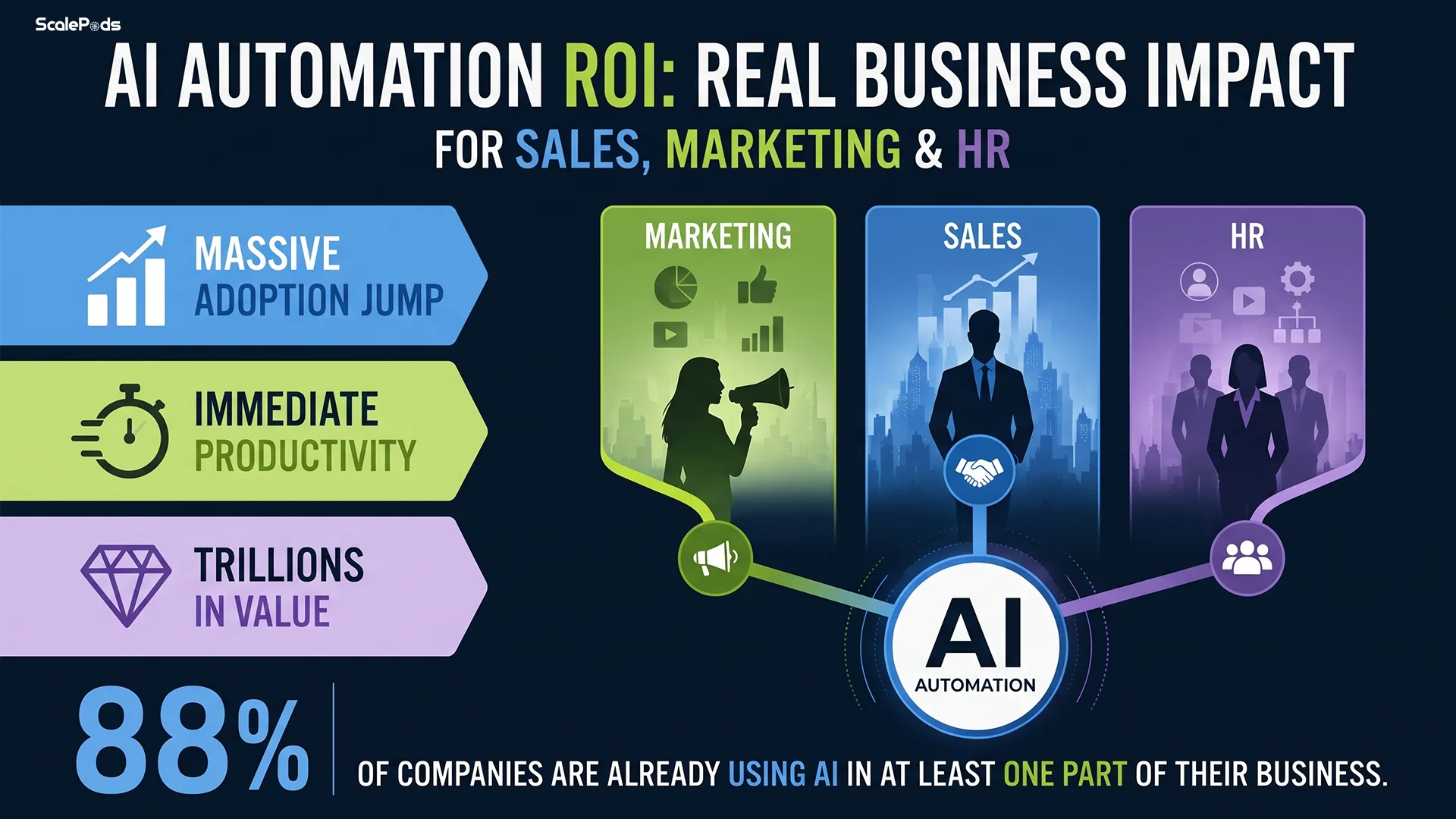
Guess how many companies are already running AI in at least one part of their business?
Take a second. Picture the number.
It's not 40%. It's not even 60%.
It's 88%.
That's not a forecast; it's where the market already stood in 2025, up from just one in three companies a year earlier. The shift didn't happen quietly. It happened fast, and it's still accelerating.
Here's the uncomfortable part: adoption alone isn't the advantage anymore. Almost everyone has some AI running somewhere. The real gap — the one separating market leaders from everyone else — is between companies using AI as a scattered experiment and companies using it as a deployed, department-level system that actually moves revenue.
This kind of value doesn't come from installing a generic AI tool company-wide and hoping something sticks. It comes from targeted, department-level systems that plug directly into how sales, marketing, and HR teams already work. That's the model behind ScalePods' done-for-you automation pods: AI that seamlessly manages repetitive tasks while freeing employees to focus completely on the decisions that actually need a human.
👉 See exactly how a done-for-you AI pod could plug into your Sales, Marketing, or HR stack.
Accelerating the Revenue Cycle: How AI Transforms Sales Workflows
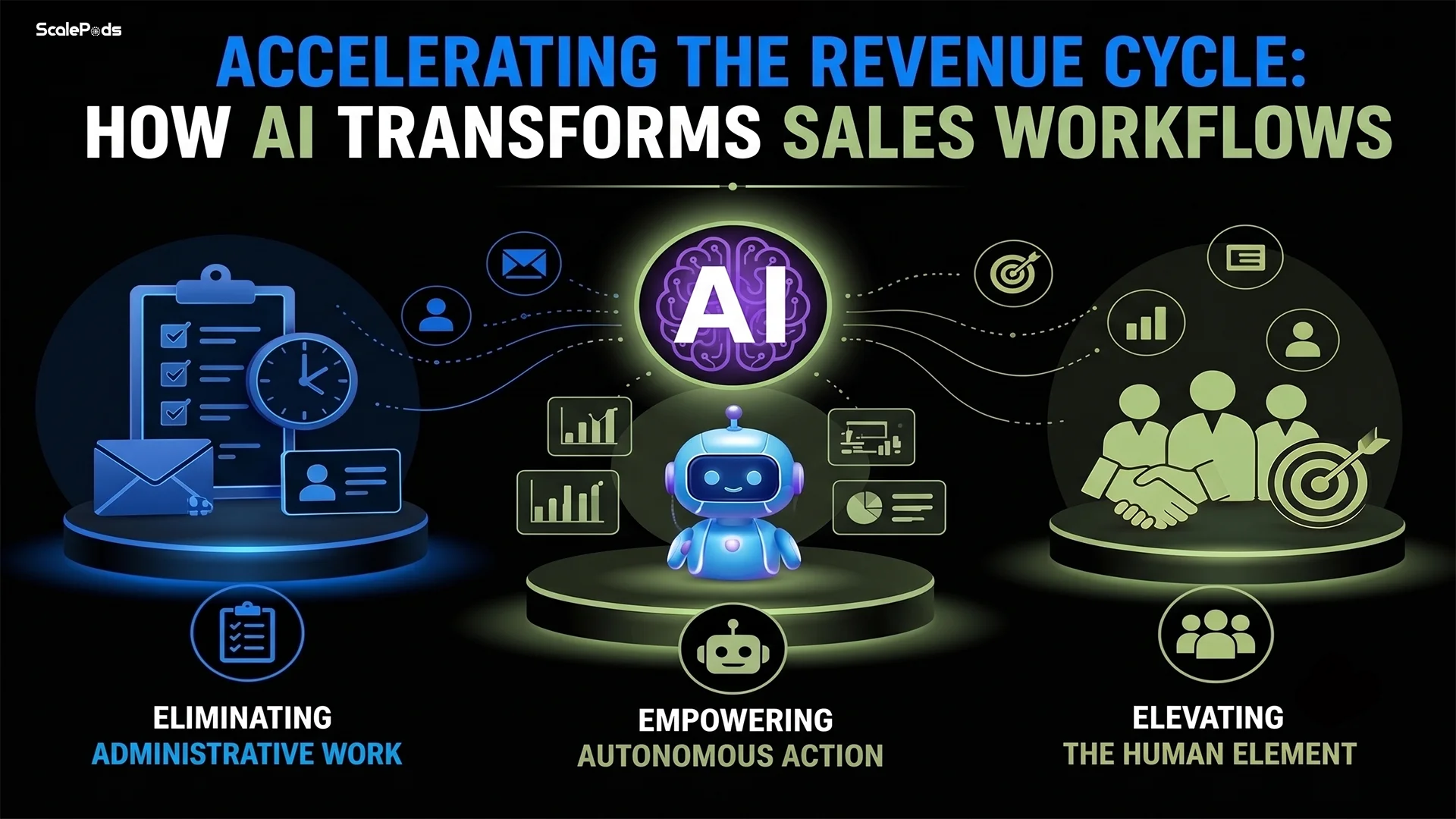
Sales is where the value of AI shows up first — and where it's easiest to measure. The metric that matters is straightforward: revenue growth. According to the State of Sales report by Salesforce, 83% of sales teams using AI reported clear revenue growth in the past year. That's not a marginal edge; it's a documented advantage for early adopters.
The driving force behind that growth is workflow optimization — and it shows up in three specific ways:
👉 Curious what this looks like inside your own pipeline?
Scaling Campaign Execution with Intelligent Marketing
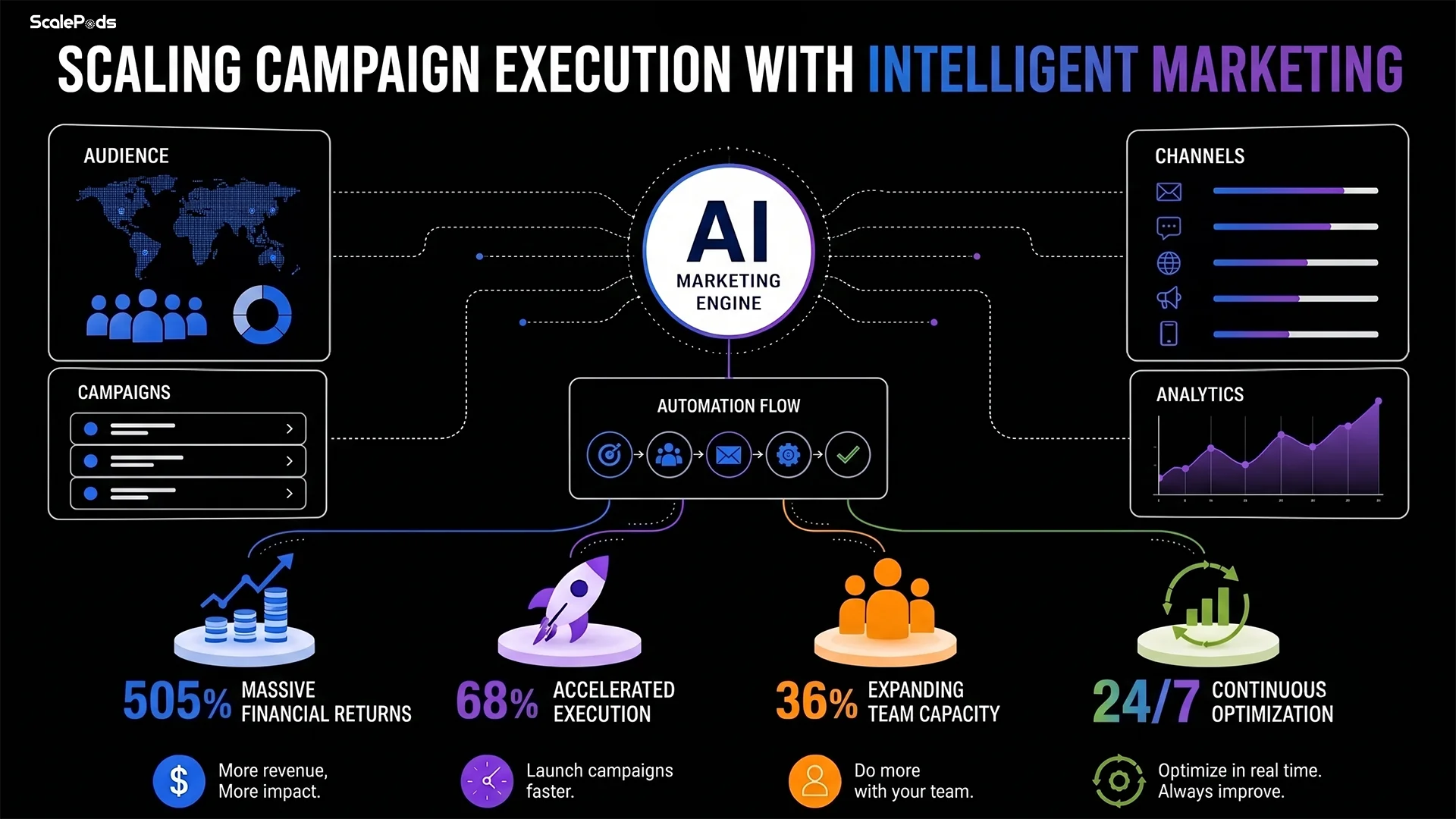
Marketing automation is one of the most mature, well-documented applications of AI in business today. It's turned marketing from an intuition-led discipline into a data-powered revenue engine. Personalizing outreach across thousands of contacts takes processing power no human team can match manually — a dedicated marketing pod analyzes that volume of customer data instantly, segmenting audiences and launching targeted campaigns without the usual lag.
The financial returns and operational impact of these automated systems are strong across the board:
👉 Want campaigns that launch themselves and optimize in real time?
Streamlining the Workforce: How AI Transforms HR Operations
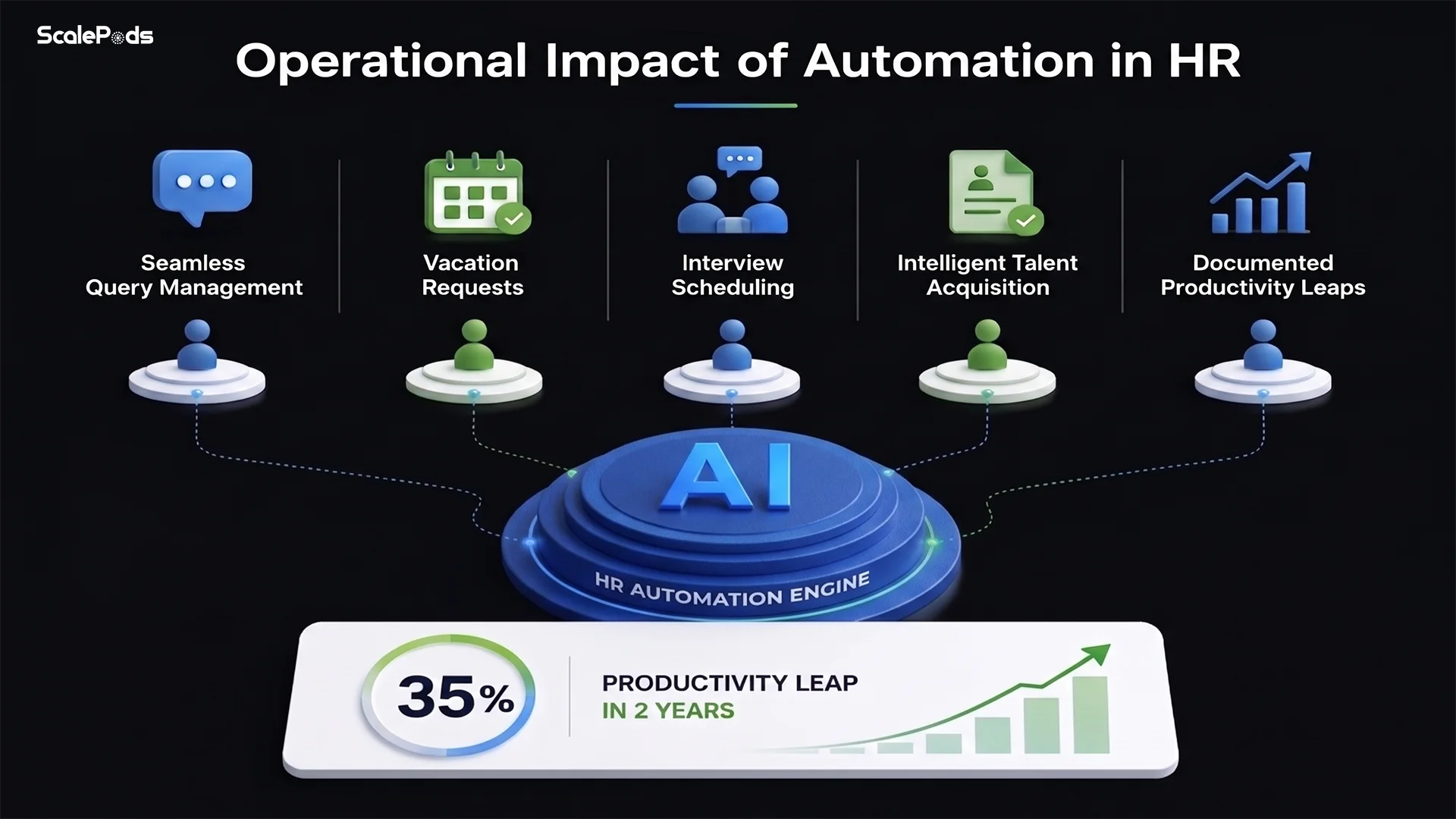
HR is going through one of the most effective AI-driven transformations of any department — largely because so much of the work is repetitive by nature. Intelligent automation takes over the routine interactions and data processing that used to eat entire days, and the payoff shows up as a measurable jump in efficiency across talent acquisition and employee support.
The operational impact is clear, documented, and driven by the complete automation of high-volume tasks:
With the heavy data processing handled automatically, HR leaders get to spend their time where it actually matters — running meaningful final interviews, evaluating cultural fit, and building a workplace people want to stay in.
👉 See what a done-for-you HR pod would take off your team's plate.
Strategic Takeaways: Translating Research into Action
None of this happens by accident, and it doesn't happen overnight either. The companies pulling ahead aren't the ones with the biggest AI budget — they're the ones who picked a starting point, deployed it properly, and let the results compound while everyone else was still debating pilot programs.
Data alone doesn't drive growth but execution does. Based on the research above, five principles consistently separate market leaders from everyone else still deciding when to start: