
HR Automation: The Complete Guide for 2026
HR teams in 2026 face unprecedented hiring pressures, compliance complexity, and employee expectations. Learn how advanced workflow automation and AI scale recruitment, simplify onboarding, and cut administrative burden by 80%.

Introduction
HR automation is the use of software and workflows to complete repetitive HR tasks with less manual effort. It helps teams save time, reduce errors, improve compliance, and create a better employee experience. HR teams in 2026 face more hiring pressure, more compliance complexity, and higher employee expectations but automation helps them handle these demands without increasing manual workload. This guide explains how advanced automation platforms like ScalePods cut admin burden, reduce risk, and enable HR teams to focus on strategic priorities.
The Building Blocks of HR Automation
The foundation of modern HR operations relies on building blocks that transition traditional processes into automated, self-sustaining workflows.
The Evolution of HR Automation
HR Automation has evolved from manual administration to digital HR systems and now to AI-driven workflows. Each stage has reduced friction and improved speed.
Key Benefits of HR Automation
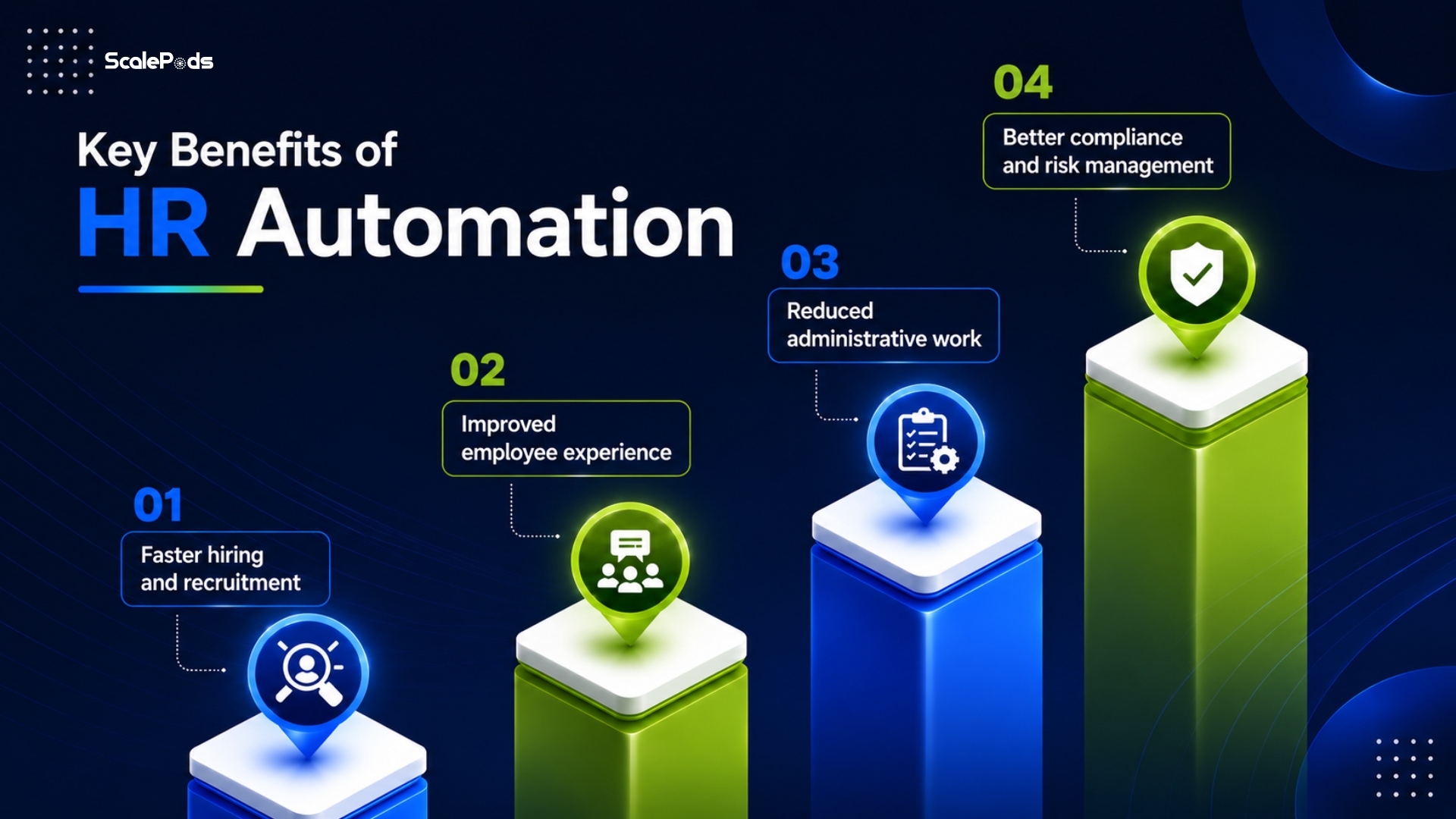
HR teams spend a surprising share of their week on work that has nothing to do with people chasing paperwork, re-entering the same data twice, and manually checking whether something meets the latest compliance requirement. Automation removes that friction, and the impact shows up in hiring speed, employee satisfaction, and risk exposure all at once.
10 HR Processes That Every Business Should Automate
The best HR processes to automate first are repetitive, rules-based, and high-volume. These usually deliver the fastest ROI.
Recruitment & Screening
Filter applications and shortlist candidates based on preset criteria automatically.
Interview Scheduling
Remove back-and-forth communication and speed up scheduling.
Employee Onboarding
Assign tasks, collect documents, and send welcome messages.
Attendance Tracking
Record presence and work hours with minimal manual overhead.
Leave Management
Handle requests, approvals, and team visibility in one workflow.
Payroll Processing
Sync employee, attendance, and leave data to reduce errors.
Performance Reviews
Schedule reviews, send reminders, and collect feedback on time.
Document Management
Store contracts, forms, and policies in one secure central place.
Compliance Tracking
Track deadlines, policy acknowledgments, and required records.
Employee Offboarding
Manage final checklists, access removal, and exit paperwork.
List ScalePods HR Datasheets
Get instant access to our comprehensive HR workflow blueprints, automation readiness checklists, and resource calculators.
How AI is Transforming HR Automation in 2026
AI is reshaping HR by speeding up screening, matching, support, and analytics. It makes automation smarter, not just faster.
The future of HR automation is predictive and autonomous. Systems will increasingly recommend actions, detect risks, and complete tasks with less human input.
The Real Barriers to HR Automation in 2026
Resistance to change is the biggest barrier.
70% of HR transformation projects fail due to poor change management, not technology. Clear communication and structured training cut resistance.
Dirty data derails migrations and automation.
Organisations with poor data hygiene spend 3x longer on system migrations. Cleaning and standardising records cuts go-live delays significantly.
Disconnected systems put operations at risk.
Only 19% of HR teams have full audit trails across all people systems. Secure software with native payroll integrations reduces exposure.
Up to 56% of HR tasks can be automated today.
McKinsey research shows most headroom sits in repetitive admin — data entry, approvals, and reporting — not sensitive people decisions.
Automate the routine. Protect the human moments.
78% of employees say they still want a human involved in sensitive HR conversations, even when AI handles the admin around them. Automation works best when it clears space for empathy, not replaces it.
How Are HR Teams Around the World Using Automation?
HR automation looks different depending on the size and structure of the team using it; a 15-person startup and a 10,000-employee enterprise are automating for very different reasons, even when the underlying software looks similar.
How to Implement HR Automation Successfully?
Identify process bottlenecks
Find the tasks that are slow, repetitive, or error-prone — these are your highest-value automation targets.
Define automation goals
Set measurable targets — reducing time-to-hire, improving compliance, or cutting admin hours by a specific amount.
Choose the right HR automation platform
Select software that fits your workflow, team size, and integration needs — particularly payroll, identity, and comms tools.
Train employees and HR teams
Bring users in early so they understand the new workflows before go-live — adoption rates are significantly higher when training precedes rollout.
Measure success using KPIs
Track cycle time, task completion rates, error reduction, and time saved — review monthly in the first quarter after launch.
The HR Automation Software Checklist
How ScalePods Helps Businesses Automate HR Operations
End-to-end recruitment automation
Job postings to offer letters, without manual follow-ups at every stage.
Employee onboarding and lifecycle management
Structured onboarding, role changes, and exits, without paperwork chasing.
Attendance, leave and workforce tracking
Real-time attendance and leave data, synced across teams and locations.
Compliance and documentation management
Policies, records, and audits kept current without last-minute scrambles.
AI-powered HR workflows
Repetitive HR tasks automated, so your team can focus on people.
Unified HR operations dashboard
One view for recruitment, attendance, compliance, and performance data.