
Best Sales Automation Software in 2026: 9 Features to Look For (How SalesPod Handles Them)
Choosing sales automation software in 2026 means finding a connected system, not just an email sender. This guide covers nine features to check, from AI prospecting and lead scoring to CRM updates and analytics, and shows how ScalePods SalesPod handles each one.

Introduction
Choosing sales automation software in 2026 is not about sending automated emails or reminding sales representatives to follow up. Companies need an automated sales system that can find prospects, start chats on channels, read buyer replies, nurture leads, update CRM records, and allow sales teams to focus on opportunities that truly lead to a purchase. The best sales automation tools now cover the whole sales workflow, not just email.
The problem is that these tasks normally happen in different tools. Lead data remains in one platform, outreach occurs in another, and chats are scattered across inboxes. Messaging apps and CRM records require updates. Response times and follow‑ups are slow. Without connected sales process automation, it is difficult to see what truly drives revenue.
ScalePods SalesPod is an AI sales automation platform designed to link these activities into one sales workflow automation setup. Instead of treating prospecting, outreach, nurturing, and reporting as separate jobs, SalesPod brings them together with AI‑powered sales automation that matches a business’s ideal customer profile, communication preferences, and sales goals.
This guide lists nine features to check when choosing sales automation software. It also shows how SalesPod handles each one. Whether you are comparing the best AI sales tools, a sales automation CRM, or sales process automation software, these nine checks apply.
What Is Sales Automation Software?
Sales automation software, sometimes called a sales automation system, uses technology to set workflows and AI tools to reduce tasks in the sales process. Typical uses include lead generation, outreach sequences, follow‑up scheduling, lead scoring, CRM updates, pipeline tracking, and sales reporting. Automation in sales also covers sales lead management software, sales pipeline software, and sales email automation software.
Today, platforms combine these features with multi‑channel engagement and AI‑assisted prioritization. Many vendors now package this as marketing and sales automation, or as sales and marketing automation tools, so one platform handles campaigns and sales follow‑up together. Salesforce, for example, talks about sales engagement as communications, sales cadences, prospecting, and engagement intelligence. HubSpot also explains automation for sales sequences and follow‑up tasks. These functions demonstrate why evaluating a platform feature by feature is better than comparing product names.
The 9 Essential Sales Automation Features to Look For
When evaluating sales automation tools in 2026, look beyond surface-level feature checklists. Below are the nine core capabilities essential for modern revenue teams, paired with an objective look at how ScalePods' SalesPod engine handles each one.
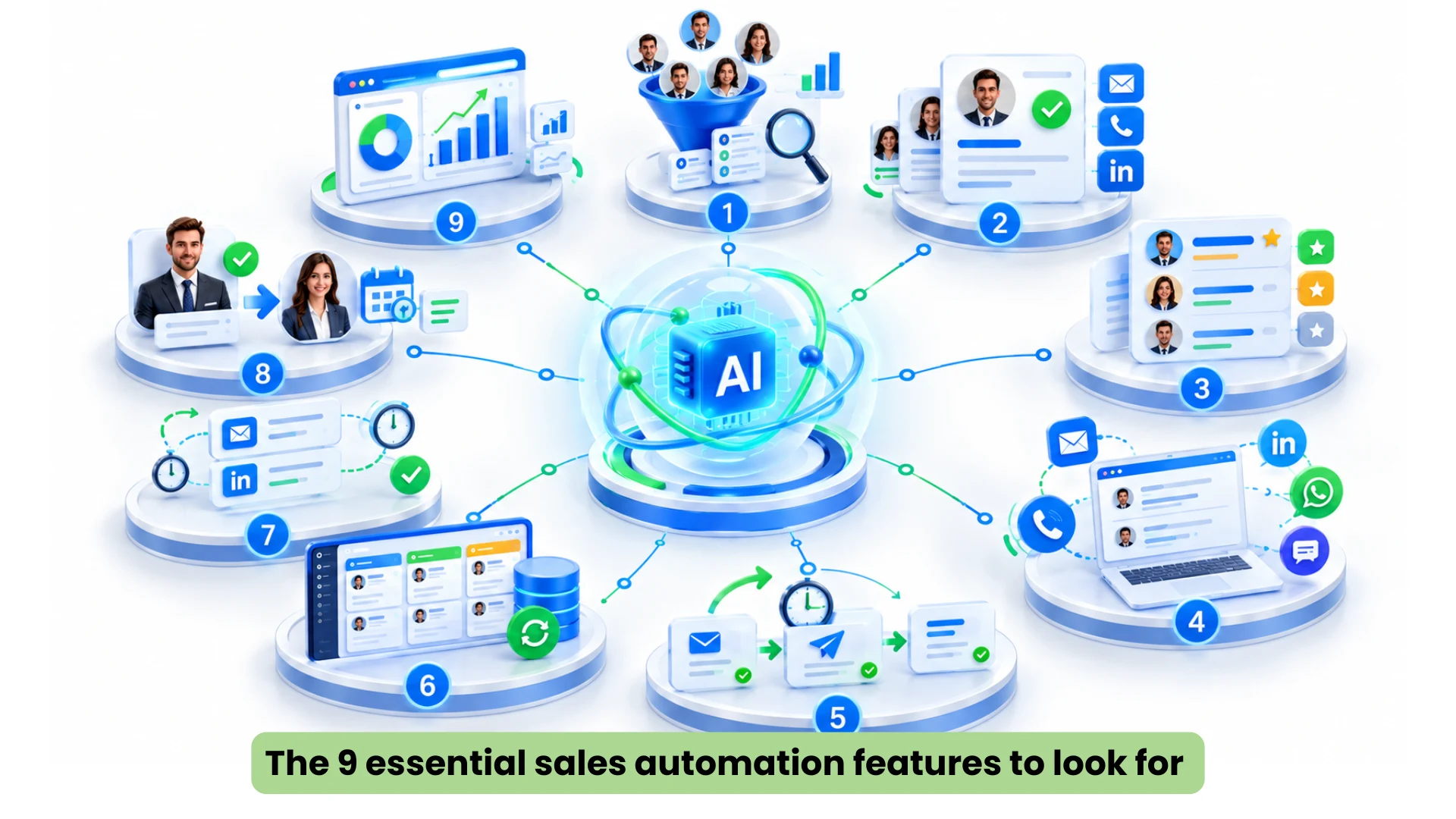
1. AI‑Powered Lead Generation and Prospecting
What to look for: The ability to find customers according to an ICP, target industries, company traits, roles, and other qualification criteria.
Sales prospecting begins with a question: who’s most likely to need the product or service? Without an answer, sales teams can waste hours creating lists of contacts that are unlikely to convert.
Good lead generation software should help companies set their target audience, find prospects, and create lead lists that support a sales process. AI for sales prospecting and sales prospecting automation take much of this manual research off the team. Salesforce’s lead‑generation guidance also stresses finding buyers and matching engagement with target audiences.
How SalesPod approaches it:
This method aims to reduce work in prospect discovery and help teams build a dependable prospecting pipeline.
Why it matters: A relevant lead list gives outreach workflows a start. Still, businesses must check source permissions, contact‑data accuracy, and compliance with privacy and marketing laws before starting campaigns.
2. Contact Data Accuracy and Lead Verification
What to look for: Contact details, consistent company data, and enough context to make outreach relevant.
Finding a company that matches the ICP is only the first step. Sales teams also need validated contact information and a clear idea of whom to approach. Outdated emails, incorrect job titles, and duplicate records can break an outreach campaign before it starts. Good sales lead management software keeps this data clean and organized.
Salesforce’s lead‑generation method links audience identification with engagement and unified customer data. This illustrates a foundational rule: prospecting works best when the data used to target and contact buyers is verified, enriched, and organized.
How SalesPod approaches it:
Why it matters: Better data quality cuts wasted outreach, protects domain sender reputation, and makes messaging more relevant. Before picking any sales automation software, confirm how it handles bounce prevention, duplicate suppression, missing fields, and automatic data refreshes.
3. Intelligent Lead Scoring and Qualification
What to look for: Qualification rules that rank leads dynamically based on intent signals, actions, and profile fit.
Not every lead deserves the same level of attention. A prospect who requests a product demonstration is fundamentally different from one who has not opened an email. Without qualification rules, sales representatives spend valuable hours on contacts that are only mildly curious while high-value opportunities grow cold. Sales lead automation with intelligent scoring fixes this by ranking leads for the team in real time.
Salesforce describes engagement intelligence and AI‑assisted recommendations as ways to help sellers find prospects who may be more likely to close. Apollo also highlights sales engagement capabilities that support prospect prioritization and workflow automation.
How SalesPod approaches it:
Why it matters: Qualification helps sales teams focus attention where it counts. However, sentiment is not the same as purchase intent. Scoring should look at concrete actions like a demo booking, pricing inquiry, or stated timeline, and be benchmarked against real conversion outcomes.
4. Multichannel Sales Outreach
What to look for: The ability to coordinate communication through the channels that your target audience actually uses.
Email alone is rarely enough for modern B2B sales motions. Some prospects respond on LinkedIn. Others prefer phone conversations. Some engage through WhatsApp or direct messaging channels. A multichannel strategy creates opportunities to reach buyers without forcing every interaction into an overcrowded email inbox. Outbound sales automation, sales email automation software, and sales call automation work best when they operate together in harmony.
The Salesforce sales engagement platform connects email, phone, social interactions, and sales tasks. Apollo Engage also supports sequences that coordinate email, calls, and LinkedIn activities.
How SalesPod approaches it:
Workflows are customized around your business ICP, conversation style, and language requirements.
Why it matters: Coordinated multi-channel outreach reduces the friction of juggling disparate messaging tools. The implementation must establish clear pacing rules, message frequency, consent requirements, and clean handoffs when a human representative steps in.
5. AI‑Assisted Conversation Handling and Personalization
What to look for: Messaging that reflects the prospect’s context, business value, and the intended conversational tone.
Personalization must go far beyond inserting a first name into a template. Relevant outreach reflects the recipient’s role, industry challenges, company growth triggers, and the explicit reason for contacting them. An AI sales rep, or any AI‑powered sales assistant, should be evaluated on this exact capability.
Apollo discusses sales engagement features that include AI‑assisted messaging and multichannel sequences. Salesforce also describes engagement that is grounded in verified customer and account data.
How SalesPod approaches it:
Why it matters: Contextual communication improves engagement and response rates. Using AI in sales works best when teams verify message quality, factual accuracy, localization, and brand compliance before scaling outreach. Personalization should always be grounded in real prospect data.
6. Intelligent Lead Nurturing and Automated Follow‑Ups
What to look for: Follow‑up cadences that adapt to a prospect’s stage, prior interactions, and latest responses, rather than adhering to a rigid, blind schedule.
A lead rarely converts on the initial contact. Prospects may ask questions, request supplementary data, go silent during budget reviews, or indicate interest for next quarter. An effective nurturing workflow recognizes these nuances.
HubSpot sequence documentation explains how sales teams can use scheduled emails and tasks, with sequence behavior that responds to events such as replies or meetings. Teams using sales automation HubSpot features will recognize this model. These controls help teams standardize follow‑ups without treating every prospect the same.
How SalesPod approaches it:
Why it matters: Intelligent nurturing prevents promising leads from falling through the cracks. It also requires automated safeguard rules to halt sequences immediately when a prospect declines, requests removal, or completes a meeting booking.
7. Automated CRM Updates and Sales Data Management
What to look for: Accurate CRM records that automatically capture interactions, update lead statuses, log activity, and schedule next steps with zero manual data entry.
A sales team cannot operate efficiently if its CRM is out of date. Missing call logs, duplicate contacts, and unrecorded conversations leave sales reps and managers blind. A modern sales automation CRM setup built on CRM and sales automation solves this by logging records as conversations occur.
Salesforce Sales Cloud provides tools for lead and opportunity management, pipeline visualization, and automated workflow triggers. Close CRM similarly pairs communication with CRM actions so sales reps manage their conversations and pipelines in one place.
How SalesPod approaches it:
Why it matters: Clean, real-time CRM data enables smooth rep handoffs, preserves deal history, and powers accurate revenue forecasting. Automation must be tested to ensure it never overwrites verified records or misclassifies deal stages.
8. Sales Pipeline Automation and Timely Human Handoffs
What to look for: Clear criteria that advance opportunities through pipeline stages, assign ownership, generate tasks, and bring human reps into the conversation at the right moment.
Sales pipeline automation connects automated outreach directly to the broader revenue engine. Good sales pipeline software lets you establish automated pipelines where qualified leads are routed to specific reps, calendar invites are generated, or discovery tasks are triggered immediately.
Salesforce sales engagement tools provide guided sales cadences, linked activities, and AI prioritization. Its buyer‑assistant workflows similarly alert team members and route prospects to appropriate reps.
How SalesPod approaches it:
Why it matters: Automation is not about replacing human salespeople; it is about ensuring reps spend their time speaking with buyers who are ready for a conversation. Businesses should define explicit routing criteria, rep assignment rules, escalation notifications, and response SLAs.
9. Intelligent Dashboards, Analytics, and Performance Tracking
What to look for: Analytics that tie sales activities directly to pipeline outcomes, rather than tracking vanity counts of sent messages.
A robust sales automation platform must answer strategic questions—especially for AI sales management, where leaders depend on data to guide team strategy:
Salesforce and Apollo provide reports and dashboards to monitor engagement, rep activity, and sequence effectiveness.
How SalesPod approaches it:
Why it matters: Reliable reporting uncovers bottlenecks and enables continuous optimization. Dashboards should always distinguish between vanity activity (messages sent) and commercial results (meetings booked and revenue generated).
How SalesPod Brings These Features Together
The key evaluation question is whether sales automation software functions as isolated tools or as connected steps in a cohesive workflow. This is where a unified AI sales system stands apart from a patchwork of standalone subscriptions.
SalesPod unites five core capabilities into a single operational architecture:
Together, these capabilities create an autonomous loop from initial prospect discovery to qualification, handoff, and performance review. SalesPod must be evaluated not by feature lists, but by the tangible pipeline efficiency it creates for your business.
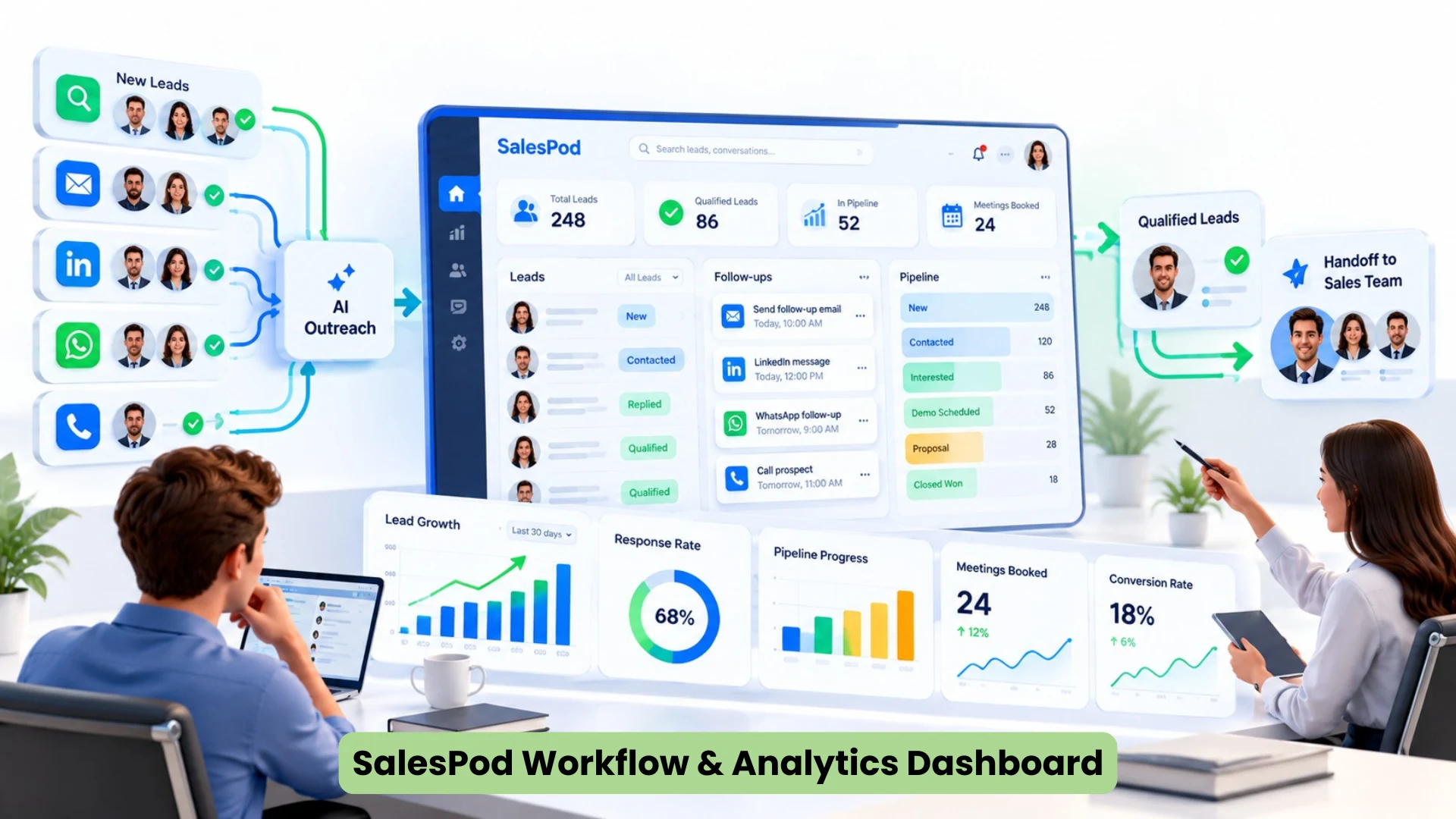
SalesPod Performance Indicators: What Do the Numbers Mean?
ScalePods currently reports the following operational benchmarks for its sales workflow automation engine:
These figures represent indicative benchmarks from comparable rollouts. When evaluating performance claims, businesses should understand baseline measurements, sample sizes, channel mixes, and operational definitions.
For example, if response times improve by 70%, evaluate whether the benchmark measures median or average response times, which channels were included, and whether inbound volume remained consistent.
Buyer’s Checklist: How to Choose Sales Automation Software
Whether you are evaluating sales automation companies, enterprise software suites, or AI SDR platforms, evaluate candidates against this 9-point criteria checklist:
Additionally, consider security controls, SOC2/GDPR compliance, implementation timelines, and total cost of ownership. Real estate brokerages, SaaS startups, and industrial enterprises each have unique compliance and sales cycle requirements.
Final Verdict: Is SalesPod Worth Evaluating?
The best sales automation software in 2026 is the one that lets your sales team spend less time on manual administration and more time advancing qualified opportunities with buyers.
ScalePods SalesPod is engineered to link prospecting, multi-channel outreach, dynamic lead nurturing, automated CRM logging, and performance analytics into a single synchronized setup. For businesses handling multiple communication channels or struggling with follow-up consistency and fragmented sales data, this approach delivers immediate leverage.
The practical next step is to map your existing sales workflow, calculate baseline conversion metrics, and identify administrative bottlenecks. From there, test whether SalesPod can automate those tasks reliably in a live pilot.
Want to automate your sales workflow? Explore ScalePods Sales Workflow Automation to see how the SalesPod engine can be customized to your sales process, or talk to our team to schedule a founder-led discovery session.