
The Future of Workflows: Why AI Automation Sets the Standard in 2026
How connected systems replaced manual admin work — and why sitting this one out is turning into a real operational risk.
From Spreadsheets to Systems That Run Themselves
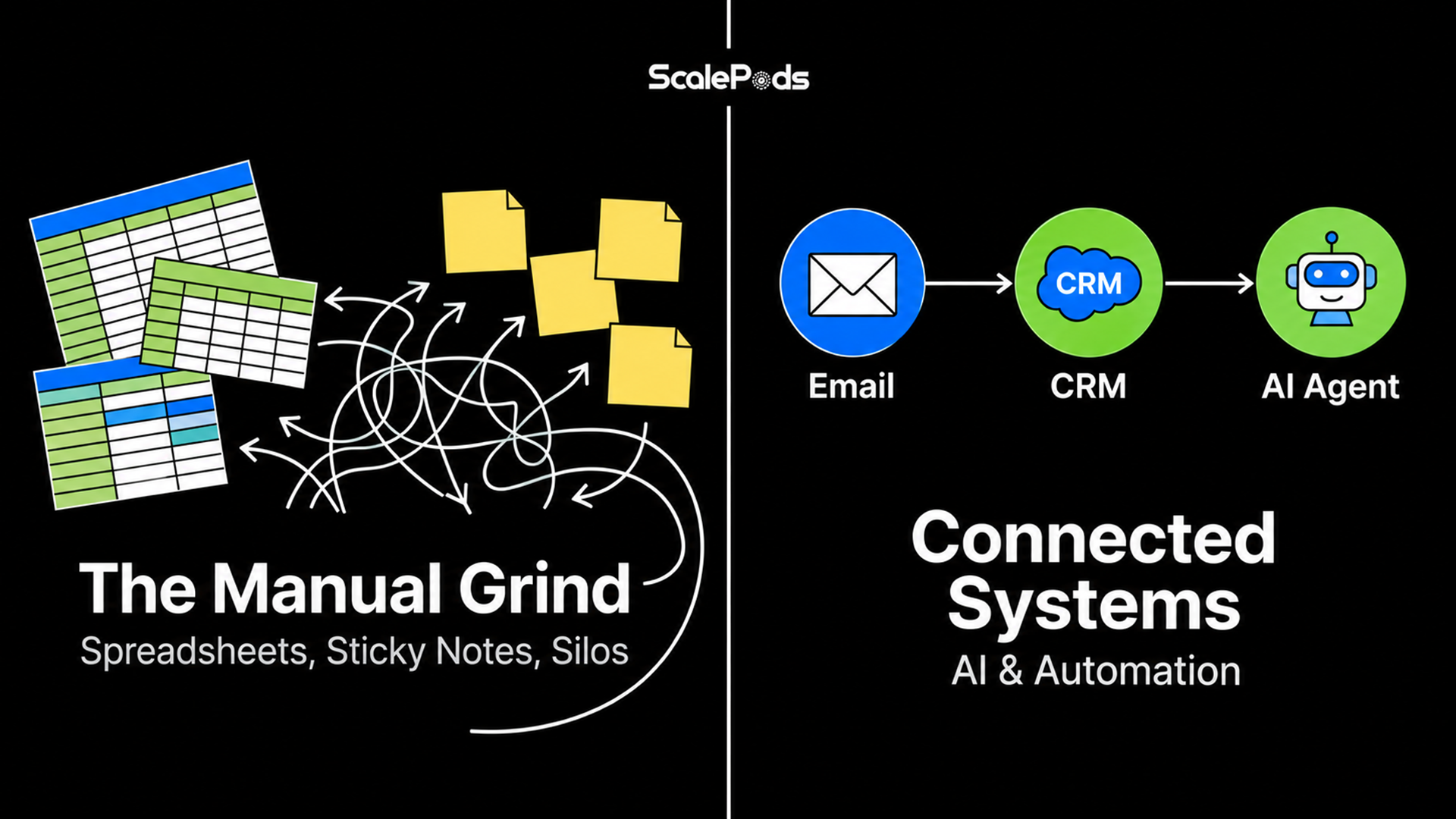
Think back to a workday from just a few years ago. There was probably a shared spreadsheet nobody fully trusted, a sticky note reminding you to follow up with someone, and a chunk of your Friday spent chasing colleagues for a sign-off that should have taken five minutes. Miss one email in that chain, and the whole thing stalled.
That version of work is mostly gone by 2026 — not because someone found a clever workaround, but because tools like Zapier, Make, n8n, and custom AI agents now do the connecting themselves. Your inbox talks to your CRM. Your web forms talk to your task board. Whether you're routing a new lead, scheduling a month of content, or getting a client set up, most of the tedious back-and-forth happens without anyone touching it.
This stopped being a startup novelty a while ago. It's just how competitive teams run things now.
What the 2026 Numbers Actually Show
You don't have to take that on faith — the benchmark data backs it up. Here's roughly where adoption and impact stood in 2026:
Sit with those numbers for a second and two things jump out:
Smarter Systems, Not Just Faster Ones
Early automation tools were fragile. If condition A happened, do B — and the moment a customer typed something the script didn't expect, everything broke. What's changed is that AI-driven workflows can actually make sense of nuance instead of just matching patterns.
Take a stack of 150 survey responses. An intern used to spend an afternoon reading through those by hand. Now a model groups the feedback by theme, flags the complaints that need attention, and hands you a summary in about the time it takes to get coffee.
Or take lead sorting. Instead of a clunky dropdown deciding how "qualified" someone is, the system reads what the prospect actually wrote and shapes the first follow-up email around it, without anyone touching it.
The point isn't just that keystrokes disappear. It's that judgment calls which used to require a person now happen at a volume no team could realistically keep up with by hand.
What This Looks Like Day to Day
Humans Still Run the Show — They Just Do Less of the Grunt Work
These systems don't clock out at 5 PM. Someone emails at 2 AM, and by the time your team logs on, the system has already drafted a reply, logged the contact in the CRM, and queued a follow-up task.
That doesn't mean people are out of the loop. You'll still want a human reviewing a high-value contract, a sensitive message, or anything genuinely unusual. What's different is that the system no longer sits idle waiting for someone to hit "start." Automation used to assist a process a person ran end to end. Now it runs the process, and people step in specifically where judgment actually matters.
Integration Is Your Real Infrastructure
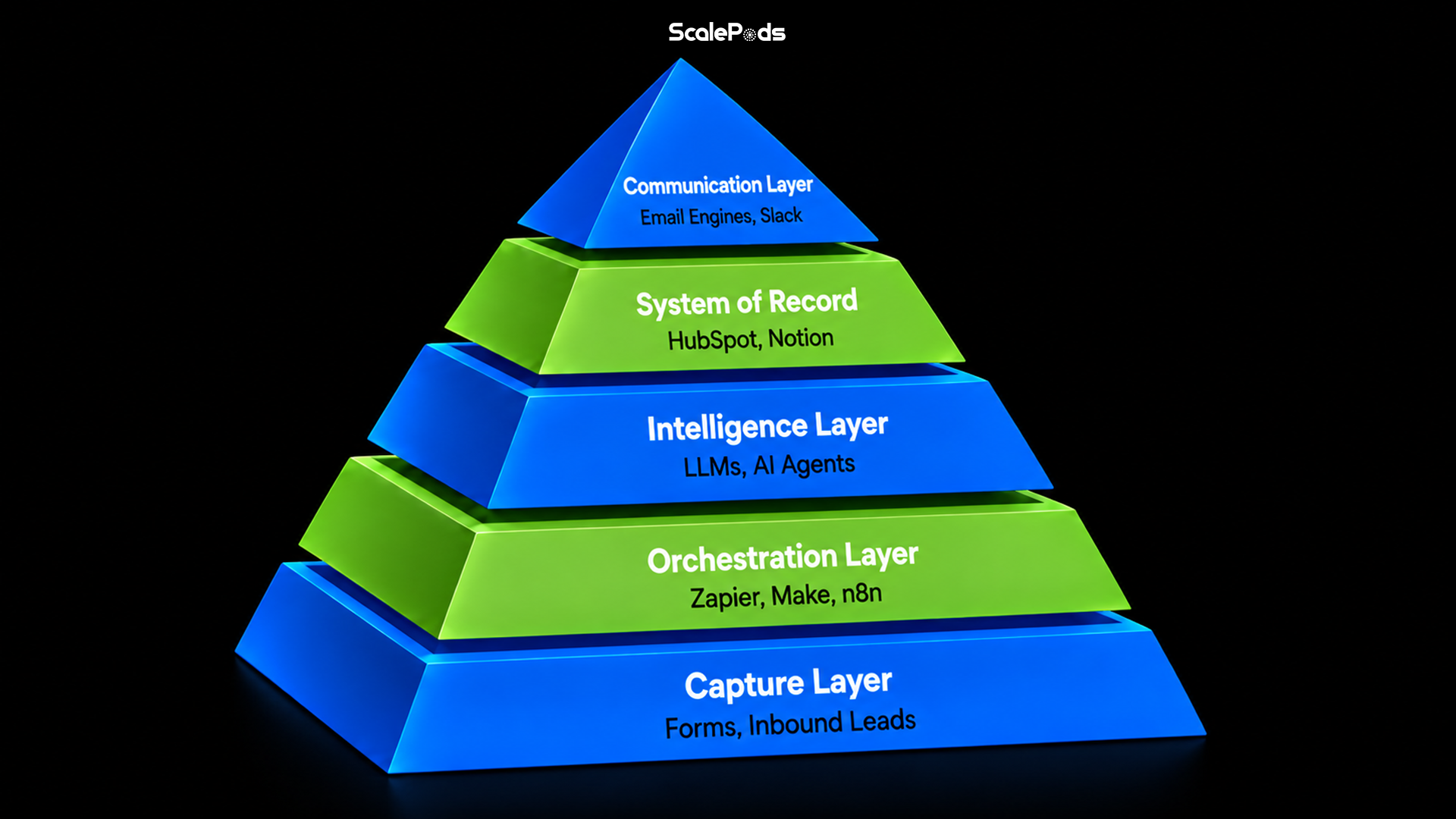
A workflow that only lives inside one app isn't really a workflow — it's a feature. Teams that get real value out of this connect their intake forms, project boards, knowledge bases, and messaging tools into one pipeline, with automation and AI agents acting as the glue: moving data between apps, kicking off the next step, closing loops without anyone forwarding an email to remind someone.
That's also why integration matters more than any individual tool on your invoice. A great CRM that doesn't talk to your inbox is still a silo — just a more expensive one. The real leverage comes from how well your apps talk to each other, not from how many of them you're paying for.
The Connected Tech Stack in 2026
The Five-Stage Loop Behind Every Reliable Workflow
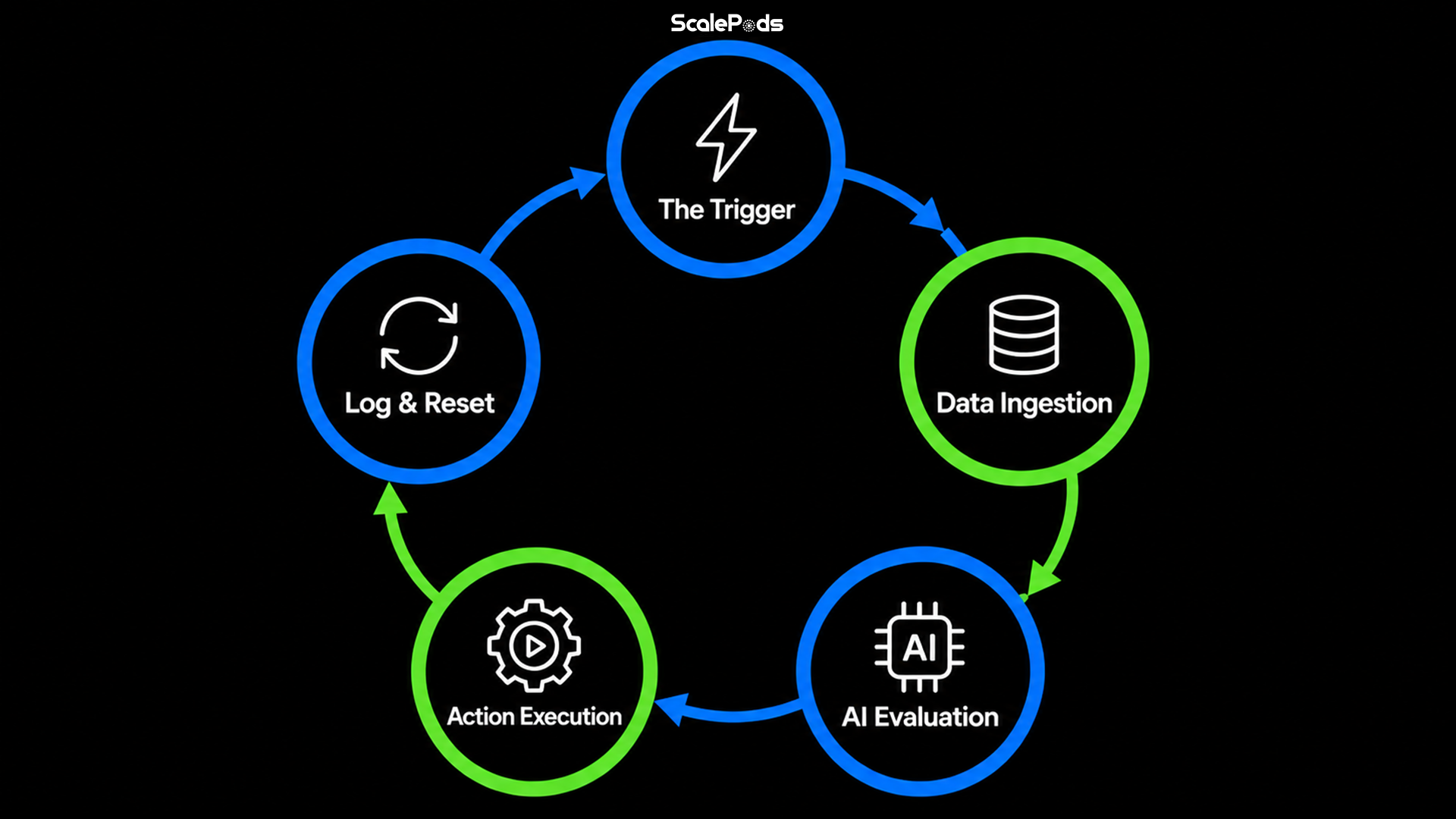
Nearly every automated workflow that actually holds up under real use runs through the same basic cycle, resetting itself once it's done:
This loop replaces the old routine of noticing a problem, trying to remember it later, and eventually getting around to fixing it by hand — usually after it's already caused a mess.
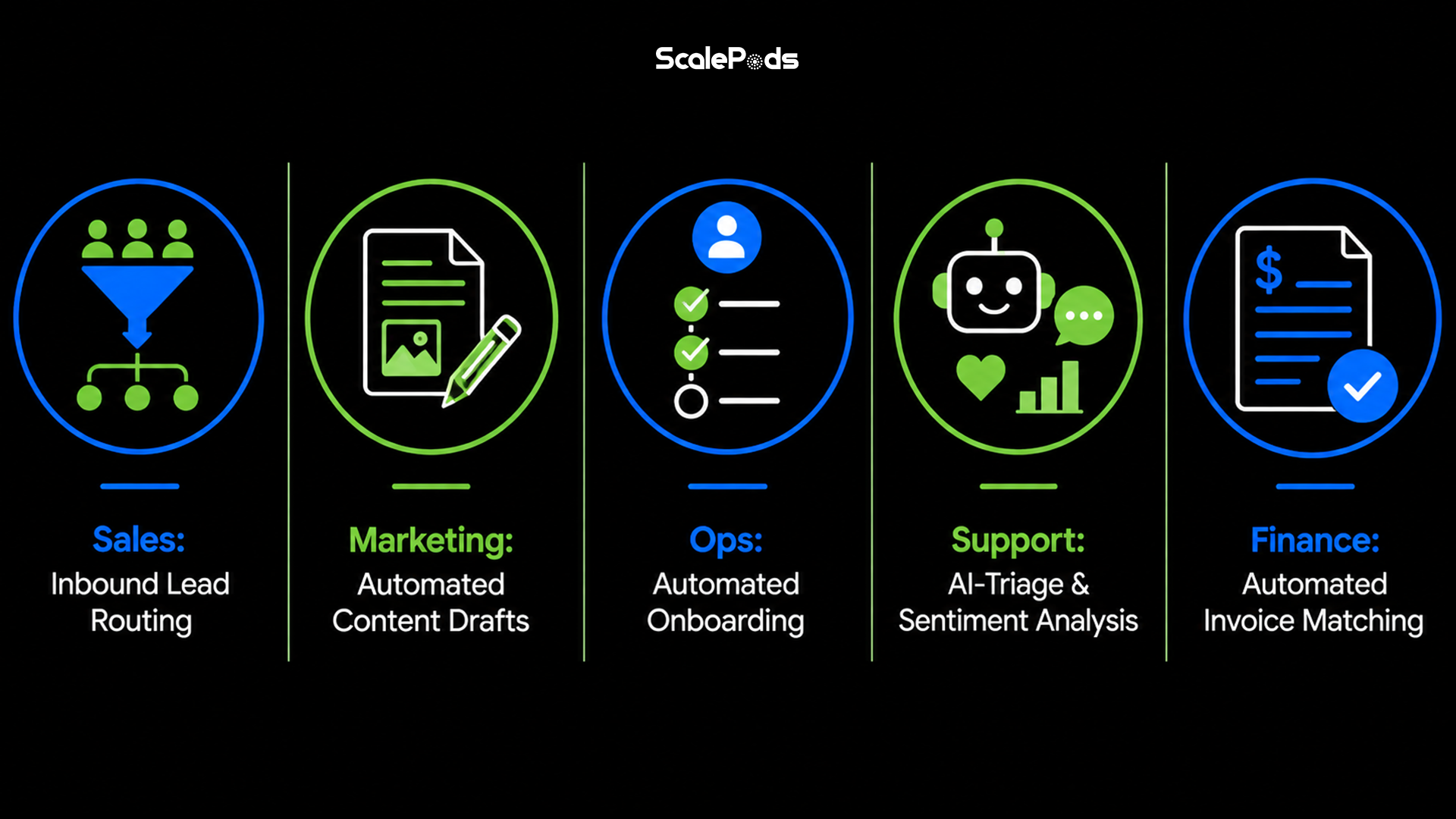
How Different Departments Are Actually Using This
Getting Started Without a Big Budget
You don't need a massive budget or an in-house engineering team to get moving on this. The teams that pull ahead usually just pick one painful bottleneck, prove it works, and expand from there.
Mistakes Worth Avoiding
The New Baseline
AI automation isn't some futuristic extra anymore — it's standard operating procedure, from solo agencies up to large enterprise teams. The businesses pulling ahead in 2026 aren't the ones with the most software subscriptions. They're the ones whose systems actually talk to each other and keep running without someone watching over them.
Handling routine work entirely by hand isn't the careful choice anymore. It's the slow one. Real productivity was never about typing faster — it's about building something that doesn't need you to babysit it.